Once Upon A Galaxy
- 4.1
- Rating
- 100.00K
- Installs
- Free
- Price

 Analysis by App-foxy
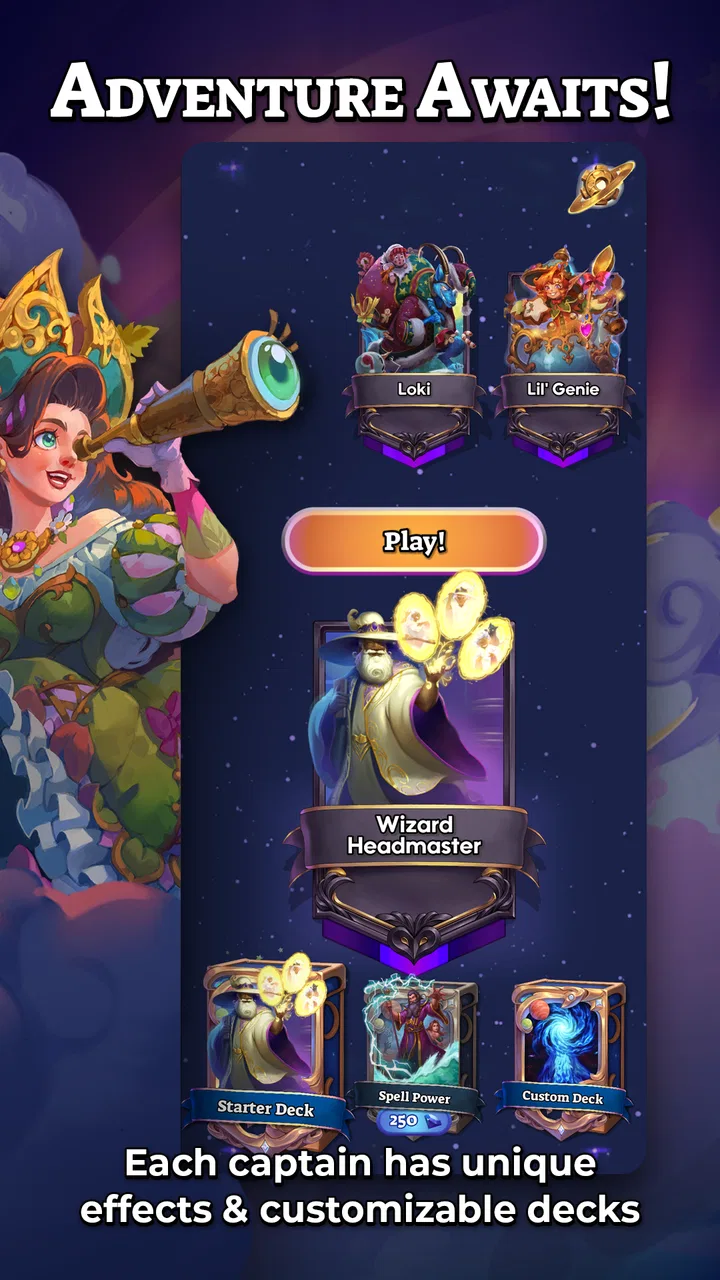
Once Upon A Galaxy is the kind of card game I open when I want a compact strategy challenge rather than a long, demanding session. It presents itself as a fantasy drafting card battler, and that description is useful: the appeal comes from choosing cards carefully, shaping a team or deck from limited options, and then seeing whether those decisions hold up in battle. I found the basic idea easy to understand, but the interesting part is deciding when to take a powerful-looking card and when to choose something less impressive that fits the plan better.
That balance makes it more thoughtful than a simple card-matching game, while its free entry point keeps the first step comfortable. Million Dreams Games has positioned it for a broad audience, with an Everyone age rating and support for devices running Android 6.0 or later. The game has attracted a 4.6 average from around 4.2 thousand ratings, alongside more than 50 thousand installs, so it has already found a modest but noticeable audience without feeling like an enormous mainstream platform.
How the game feels in everyday play
I find the everyday appeal is less about squeezing in a fixed number of rounds and more about having a clear decision to return to: weigh the cards, commit to a direction, then see how that choice holds up in battle. When I’m interrupted, I try to finish the current decision before putting my phone away; it makes the next session feel like a continuation rather than a cold restart. That rhythm leads naturally to what makes each round’s feedback useful.
You May Also Like

 Blood Strike: 2.5 Anniversary
Blood Strike’s Loadouts Turn Every Drop Into a Tactical Gamble
A close look at Blood Strike’s custom loadouts: how fast access to signature weapons reshapes its battle royale rhythm, rewards preparation, and narrows the gap between fights.

 Pandora - Music & Podcasts
Pandora’s Music Is Easy to Start, but Harder to Recover
Pandora’s strength is its low-effort path from a seed to a station. Its weak spot is how much confidence it asks you to place in connection, setup, and quiet recovery.

 8 Ball Pool
 Is Built on Rivalries, Rematches, and Routine
A close look at the rivalries, rematches, shared routines, and unanswered safety questions that turn a quick pool match into a persistent mobile community.

 Samsung Music
’s Quiet Strength Is Playing What You Already Own
Its reach comes less from spectacle than from dependable access to a personal library. That simplicity is both the app’s strongest retention engine and its ceiling.

 AccuWeather: Weather Radar
AccuWeather Review: A Quick, Clear Forecast for Everyday Decisions
For everyday plans, the best forecast is the one you can understand quickly. AccuWeather makes rain timing, radar, and local conditions easy to act on, with a few trade-offs.

 Hill Climb Racing
Why Hill Climb Racing Still Turns Crashes Into One More Run
A tiny car, a bumpy hill and one more upgrade: Hill Climb Racing keeps resurfacing because its simple chaos makes every near-miss feel personal.
More From Our News Desk
View All News


Quick starts and realistic speed expectations
My first impression is that the game is built around getting into a decision quickly. It does not need the same mental preparation as a large strategy title with a map, several currencies, and a long campaign to manage. I can approach it with a simple question: what kind of card choices are available now, and which direction do they suggest? That makes it suitable for a short break, especially when I want something more engaging than passive scrolling.
The speed of a card battler is not only about loading screens. It is also about how quickly the rules become readable. Once Upon A Galaxy benefits from a focused premise because drafting and battling give each turn a clear purpose. I spend less time wondering what the game wants me to do and more time judging whether the next card improves my current plan. That clarity matters on a phone, where overly elaborate interfaces can make a supposedly quick game feel slow.
At the same time, I would not describe every moment as effortless. Drafting creates pauses by design. If I am comparing several possible choices, the game slows down because I am thinking, not because the app is necessarily struggling. That distinction is important. Someone looking for an entirely automatic experience may find the decision-making more involved than expected, while players who enjoy weighing trade-offs will probably see those pauses as the main attraction.
A useful habit is to decide what my current priority is before examining every option. Sometimes I need immediate strength, while at other times I should choose a card that supports a longer combination. Making that distinction early keeps the game moving and prevents me from treating every attractive card as equally valuable. It is one of the first practical lessons I would pass on to a new player.
What happens during heavier play
The demanding moments come when several decisions connect. A single card may look useful by itself, but its real value depends on the rest of the draft and on how the battle develops. When I play several rounds close together, I notice that the mental load rises before the physical load does. I am tracking patterns, remembering what I passed over, and considering whether to protect a stable strategy or gamble on a stronger outcome.
That makes the game a better fit for focused sessions than for distracted multitasking. I can play while waiting for an appointment, but if I keep switching between the game and messages, I am more likely to make a poor draft choice than to lose because of slow controls. The most effective short-session routine is to finish one meaningful decision cycle before putting the phone down, rather than opening the game for a few seconds and abandoning it in the middle of a plan.
For heavier users, the free-to-play structure deserves attention. In-app purchases range from $4.99 to $99.99 per item. That does not automatically make the game unsuitable, but it does mean I would approach optional spending deliberately. I would first decide whether the core drafting and battling loop is enjoyable without buying anything, then set a personal limit before browsing purchase options. The large upper end of the range is especially relevant for families sharing a device or for anyone who tends to spend impulsively during competitive games.
My practical recommendation is to treat purchases as a convenience rather than as the reason to continue playing. If progress only feels satisfying after spending, the game is probably not a good match for your preferences. If the free experience already gives you enough room to experiment with card choices, then optional purchases can remain exactly that: optional. This is a healthier way to evaluate the game than assuming a purchase will solve every strategic problem.
Reliability and recovering from interruptions
Reliability matters more in a card battler than many people expect. A dropped session at the wrong moment can erase a carefully considered draft or leave me unsure whether a battle result was recorded. In my use, I pay attention to whether the game lets me return to the same flow after a distraction, because phone play is full of interruptions: a call arrives, the screen locks, or I move from a strong connection to a weaker one.
Once Upon A Galaxy feels most comfortable when I give it a clean, uninterrupted stretch of attention. That is not a criticism of the concept; strategic card games naturally benefit from continuity. Still, I would avoid starting an important session when I know I may need to close the app immediately. A safer routine is to finish the current choice or battle phase before switching away, then reopen the game when I have a few quiet minutes.
The current version is 2.0.18, which suggests the game has moved beyond its earliest release stage. It launched on July 30, 2024, and the version number shows that it has received ongoing iteration since then. I would still keep the app updated through the normal store process, particularly if I play regularly. Updates are most valuable when they improve compatibility or smooth out edge cases, but I would not assume that a newer version removes every possible interruption-related risk.
One recovery technique is to make a mental note of the decision I was about to make before leaving the screen. That sounds minor, but it prevents me from reopening the game and immediately choosing something just to regain momentum. If the session returns normally, I can continue with the same plan. If the state looks different, I have a better chance of noticing before committing to another move.
Device constraints and resource expectations
The Android requirement is relatively accessible: the game supports Android 6.0 and later. That opens it to older compatible phones, but an operating-system requirement alone does not guarantee identical performance across every device. Hardware age, available storage, background apps, and the general condition of the phone can all affect how comfortable a game feels.
On a newer phone, I would expect the interface and card decisions to feel more at home, especially when moving through several rounds. On an older compatible device, I would be more cautious if the phone already struggles with other games. Closing unnecessary background apps before playing is a sensible step, not because this title is confirmed to be unusually demanding, but because it gives any mobile game a cleaner environment.
Resource demands are also about attention and battery habits, not just graphics. A visually simple card game can still keep me engaged for longer than intended because each choice invites another round. I would avoid judging the game only by how light it appears. If I play continuously, the main cost may be session length rather than any single dramatic performance spike. Short breaks help both the device and my decision quality.
For parents, the Everyone rating makes the game easier to consider for a broad household, but the purchase range still deserves a separate conversation. Age suitability and spending suitability are not the same thing. I would check the device’s purchase controls before handing it to a child, particularly if payment details are already connected to the app store.
Drafting depth without unnecessary complexity
The strongest part of the design is the tension between immediate value and future value. A card that looks powerful can be the wrong choice if it does not support the direction I am building. Conversely, a modest-looking option may become important when it completes a useful pattern. This is where the game separates itself from casual card titles that mainly reward quick reactions or obvious matches.
I recommend new players resist the urge to chase the most impressive card in every draft. Instead, I would look for a consistent idea and ask whether the next choice strengthens it. This approach makes losses more informative. If the plan fails, I can identify whether the problem was poor card quality, an awkward combination, or a decision to change direction too late.
Another useful technique is to distinguish between a flexible card and a specialized one. Flexibility is valuable early, when the final shape of a strategy is unclear. Specialization becomes more attractive later, when the rest of the draft has already created a clear purpose. This is a small but meaningful trade-off: choosing flexibility can prevent a weak early commitment, while choosing specialization can produce a stronger payoff if the surrounding cards cooperate.
I also like treating each battle as feedback rather than as a simple verdict. If a strategy fails, I would not immediately replace the entire approach. I would change one decision at a time in the next attempt. That makes it easier to understand the game’s rhythm and avoids the common mistake of blaming a single card for a problem created several choices earlier.
How it compares with familiar card-game alternatives
Compared with a traditional solitaire-style card game, Once Upon A Galaxy asks for more planning and gives card choices a stronger strategic role. Solitaire is often ideal when I want a quiet, familiar puzzle with little learning overhead. This game is better when I want my choices to shape a battle and when I am willing to accept that a good-looking option may not be the right one.
Compared with a large collectible card game, it feels more approachable in concept. The fantasy drafting focus gives me a clearer starting point than a huge card library can provide. However, players who specifically enjoy building an elaborate collection, studying a large competitive meta, or managing a highly detailed deck may find this experience less satisfying than a more established collectible alternative.
It also differs from fast, reflex-driven card games. The challenge here is not mainly about tapping first. I get more value from thinking through a sequence and learning how choices interact. That makes it a poor choice for someone who wants instant arcade energy, but a good option for someone who enjoys strategy that remains readable on a small screen.
The free price is another practical advantage for comparisons. I can test the central idea without paying at the door, which is exactly what I want from an unfamiliar card battler. The spending range means I would not judge the game solely by its free label, but I can still decide whether the basic loop works for me before considering any purchase.
Who will enjoy it, and who should skip it
I think the game suits players who like fantasy themes, card decisions, and battles that reward planning over frantic input. It is also a reasonable choice for someone who wants a mobile game that can fit between daily tasks without requiring a long narrative commitment. A commuter waiting for a train, for example, can use a short quiet window to make a few thoughtful choices, provided there is enough time to finish the current stage cleanly.
It is less suitable for players who dislike uncertainty or who want every round to be solved through a fixed, predictable sequence. Drafting naturally asks me to adapt. The best option may not appear, and a plan can become less attractive after later choices change the situation. That variability is part of the appeal, but it can feel frustrating if I prefer complete control.
I would also recommend skipping it if you are looking for a purely offline-feeling pastime with no temptation to spend. The free entry is helpful, yet the presence of in-app purchases means budget-conscious players should decide their boundaries in advance. Likewise, someone using a very old phone that already has trouble with games should not choose this solely because Android 6.0 support sounds broad.
My performance verdict after regular use
My overall impression is that Once Upon A Galaxy succeeds when it stays focused on its central decision loop. It feels most rewarding when I slow down just enough to recognize a developing strategy, then use the next draft choices to support it. The game does not need a complicated presentation to create tension; the uncertainty of choosing between an immediate advantage and a better long-term fit does most of the work.
Performance expectations should remain sensible. The broad Android compatibility is encouraging, and the current version indicates an actively maintained product, but I would still match the game to the phone rather than assuming every compatible device will feel identical. Keep the system reasonably clear, avoid interrupting a decision-heavy session, and judge the app over several rounds instead of one brief launch.
My recommendation is to try it free first and evaluate the decisions, not the purchase options. If you enjoy learning from imperfect drafts and want a fantasy card battler that fits naturally into focused mobile sessions, it is worth keeping installed. If you want a completely casual card pastime, a reflex game, or a deep collection-management experience, another option will probably suit you better.
For me, the lasting appeal is the small strategic conversation each round creates: what do I have, what am I building, and how much risk is sensible right now? That is a specific kind of fun, and Million Dreams Games has made it accessible enough for newcomers while leaving room for careful players to find better habits. I would recommend Once Upon A Galaxy to anyone who wants a free fantasy card game with meaningful drafting decisions, as long as they are comfortable with a little uncertainty and keep optional spending under control.
FAQs for Once Upon A Galaxy
01What is Once Upon A Galaxy about?
Once Upon A Galaxy is an immersive space adventure game where players explore distant galaxies, gather resources, and engage in epic battles. The game offers a rich storyline interwoven with strategic gameplay, allowing players to build alliances and conquer new territories. Its stunning graphics and engaging narrative make it a must-play for sci-fi enthusiasts.
02Is Once Upon A Galaxy free to play?
Yes, Once Upon A Galaxy is free to download and play. However, it includes in-app purchases that allow players to buy additional resources, skins, and other enhancements. While these purchases can enhance the gaming experience, they are not mandatory for progression in the game.
03What are the system requirements for Once Upon A Galaxy?
Once Upon A Galaxy requires Android version 5.0 or higher and iOS version 11.0 or higher. For optimal performance, a device with at least 2GB of RAM is recommended. Ensure you have sufficient storage space, as the game requires a minimum of 500MB of free space for installation.
04Does Once Upon A Galaxy require an internet connection?
Yes, Once Upon A Galaxy requires an internet connection to play. The game features online multiplayer modes and regular updates, which necessitate connectivity. While some basic functions might be accessible offline, full functionality, including events and leaderboards, requires being online.
05How does Once Upon A Galaxy handle data privacy?
Once Upon A Galaxy adheres to strict data privacy protocols. The game collects user data to enhance gameplay and provide personalized experiences. However, it ensures compliance with global data protection regulations. Users can review and manage their privacy settings within the app, offering transparency and control over personal information.
Pros
- Engaging storyline with rich character development.
- Stunning graphics enhance the immersive experience.
- Intuitive controls make gameplay smooth and enjoyable.
- Wide variety of missions keep the game exciting.
- Regular updates add new content and features.
Cons
- Requires a stable internet connection to play.
- In-app purchases can be quite expensive.
- Game may drain battery quickly on older devices.
- Some users report occasional lag during gameplay.
- Initial load times can be quite long.

Once Upon A Galaxy
Gallery